|
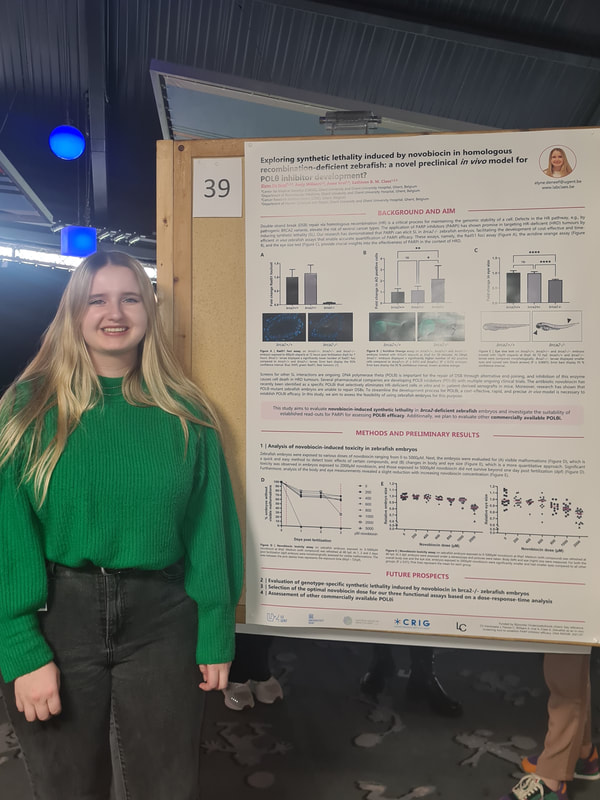
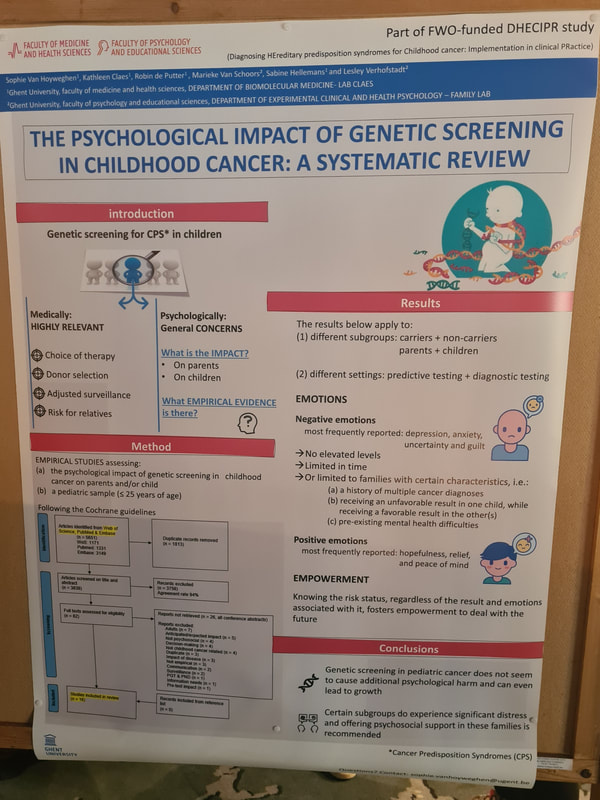
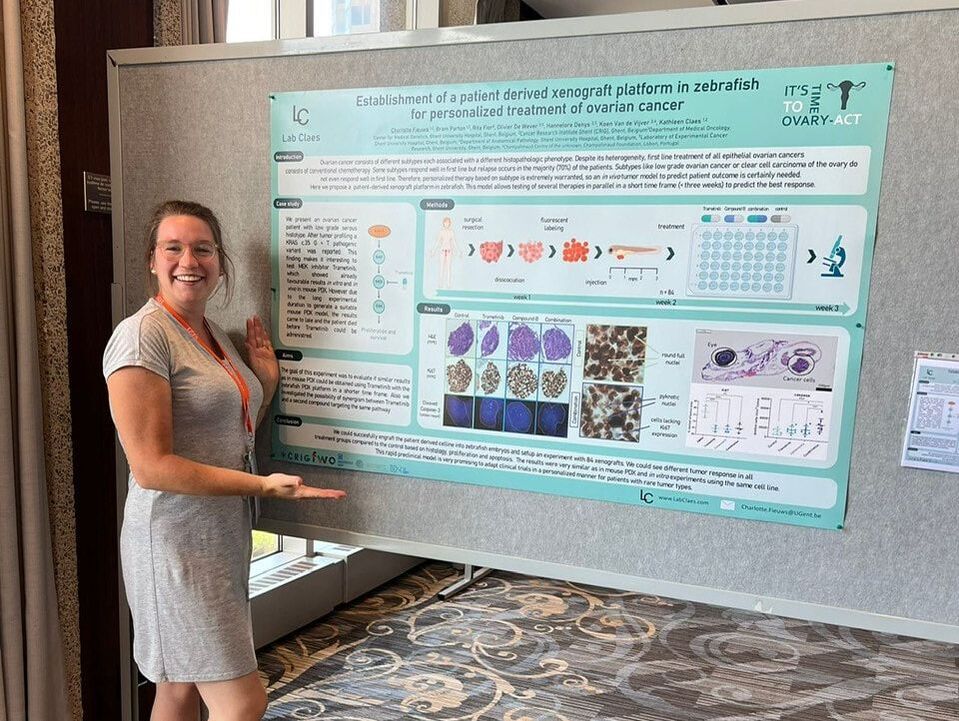
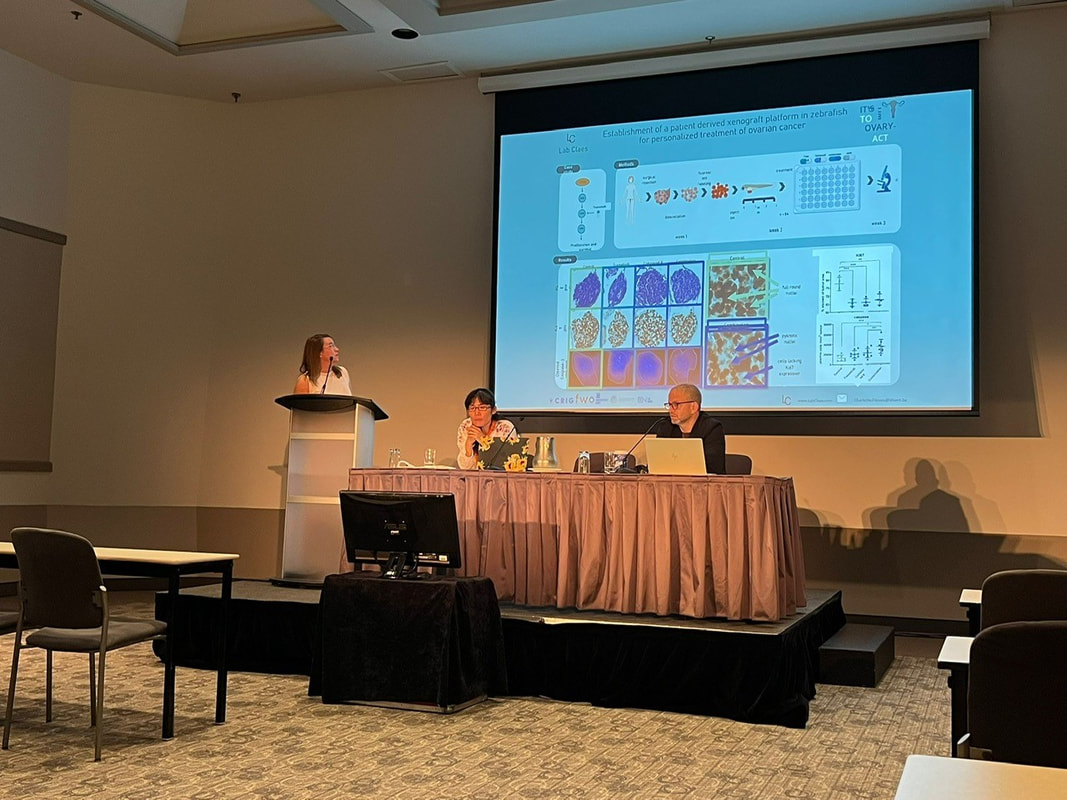
On May 14th, the first even small animal model symposium was in Ghent. An event that highlighted the potential and versatility of small animal models across diverse research domains, including disease modeling, drug and toxicology screening, behavioral studies, and investigations into biological processes and development. Elyne and Charlotte both presented their work and showed how they use zebrafish as a model in research.    At the end of April, CRIG held its annual OncoPoint meeting in Ghent. For our lab, Kathleen, Elyne, and Charlotte joined this very interesting meeting. Elyne was selected to present her research in a poster presentation, as well as during a short pitch presentation.  On the 12th of April, the annual Belgian Society for Human Genetics meeting was held in Leuven. Kathleen, Elyne and Nele attended this very educational and engaging meeting. Both Elyne and Nele presented their work with a poster.  From October 2nd to the 5th, Elyne went to Durham, USA, to attend the 16th Zebrafish Disease Modeling conference. It was a very interesting conference with all experts in the field of zebrafish research, that allowed a lot of interesting face to face conversations. It was the ideal place to network, exchange ideas and troubleshoot. Elyne presented her work with a poster presentation.  Begin May CRIG held his annual OncoPoint meeting in Ghent, this time two days in a row. For our lab Kathleen, Elyne, Nele, Sophie and Bram attended one our two days, also our new exchange student Ada joined us. Sophie held a poster presentation and was selected for a short pitch presentation, after the meeting she was even announced as one of the best pitch presentations! So many congrats Sophie!!! 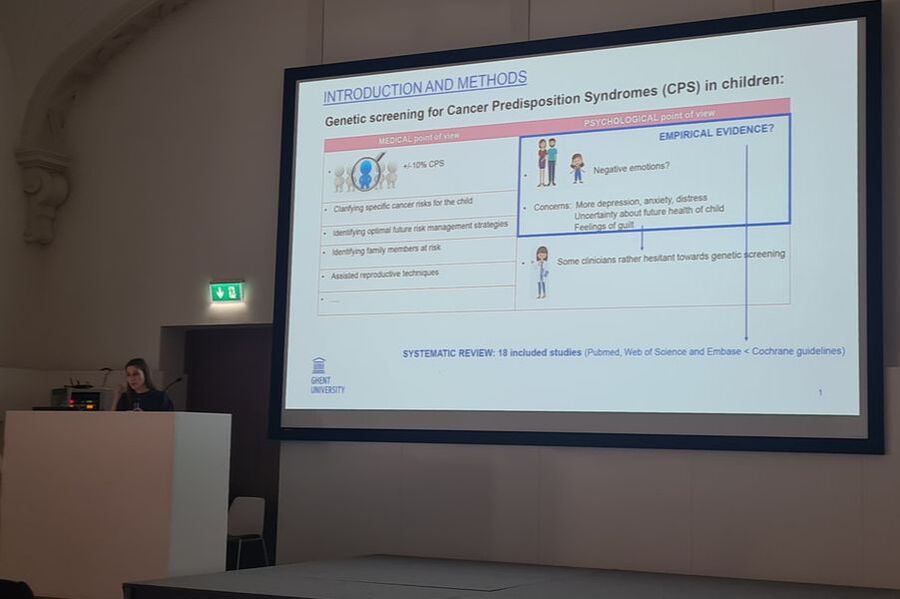 And that wasn't all for the first week off May, on the 5th the Department of Biomolecular Medicine organized their GE31 Science Meeting in Zwijnaarde.
Kim, Elyne, Nele and Ada attended for our research team. On friday 17 March the annual Belgian Society for Human Genetics meeting was held in Charleroi. For our lab Kathleen, Robin, Sophie, Elyne and Bram attended. Elyne and Sophie presented their work with a poster. See you next year in Louvain!
In november Lynn attended the RARE-MED symposium with a poster and was selected for a short pitch to promote her latest work.
The last weekend of November will be a busy one for our lab.
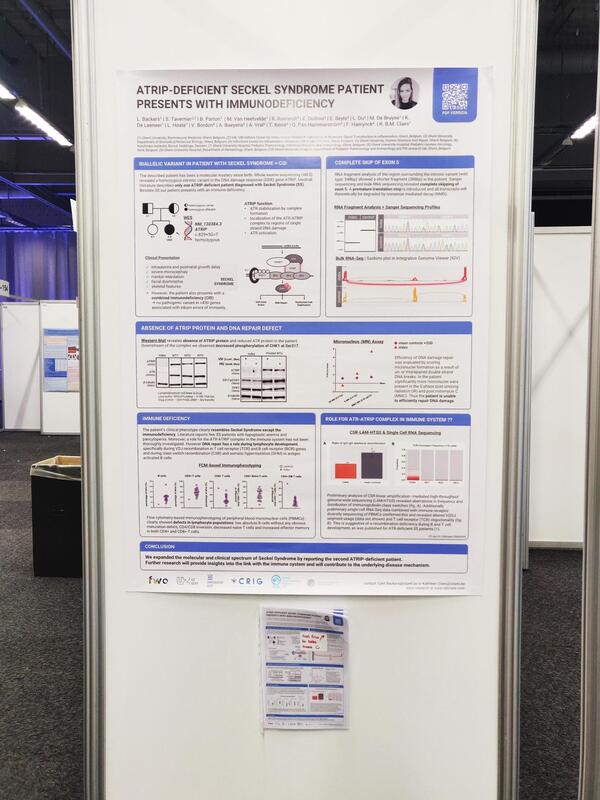
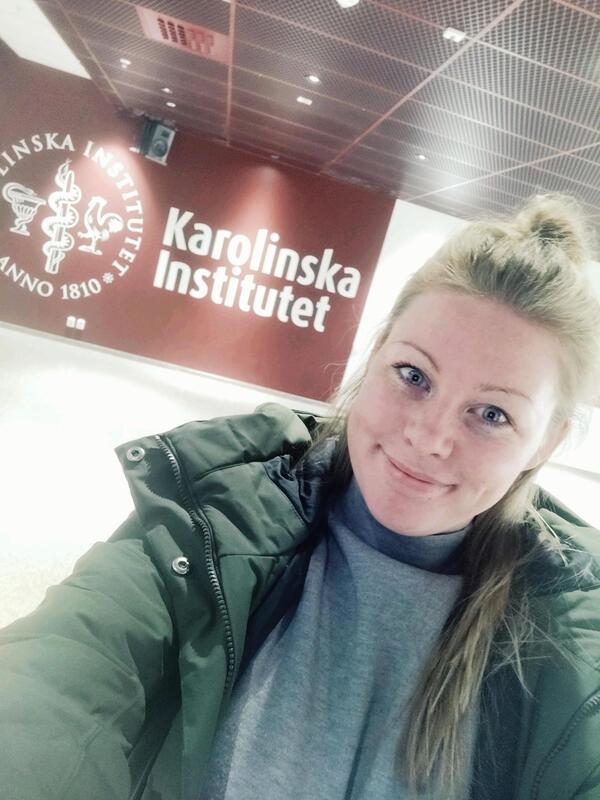
On the 26th you can visit the 'Kankercongres' in Ghent where Kathleen has a talk, more info at https://kankercongres.com/ And on sunday the annual 'Dag van de Wetenschap' is held, you can visit our labs at MRB1 on the UZ Ghent Campus. More info here. Begin October the annual European Society for Immondeficiencies (ESID) conference was held in Gothenburg, Sweden. For our lab Lynn, the only ESID member, attended with a poster presentation. Whilst in Sweden, she had a scientific meeting with members of the advisory board of her project and visited the Karolinska institute. 
Joni went to Turku, Finland, at the end of September for an ERN training workshop. The workshop was titled 'COMPREHENSIVE GENE PROFILING, MOLECULAR TUMOR BOARD (MTB) AND ARTIFICIAL INTELLIGENCE IN THE DIAGNOSIS AND TREATMENT OF PATIENTS WITH RARE ADULT CANCERS'. 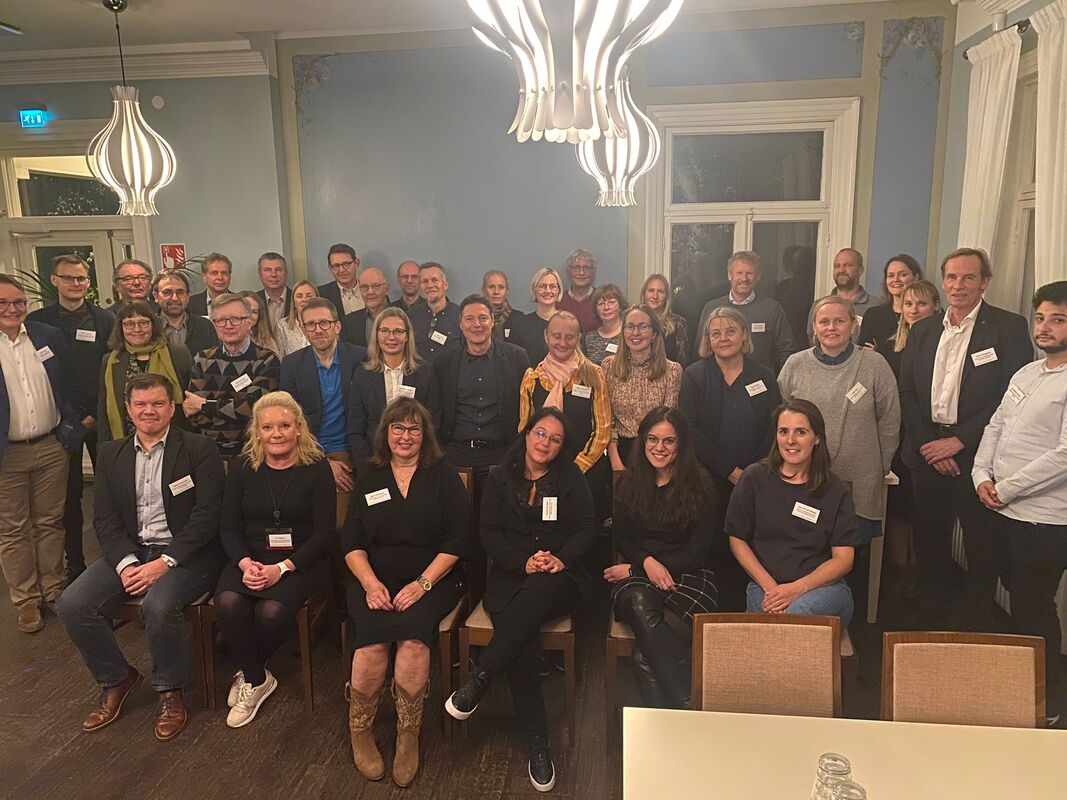 On Thursday 15 September our Department of Biomolecular Medicine organized a Science Meeting so every PI could present their team and projects to eachother. It was a nice opportunity to get to know our colleagues better and learn a lot about all the interesting scientific work that's happening at our Department. We can't wait for the next meeting. 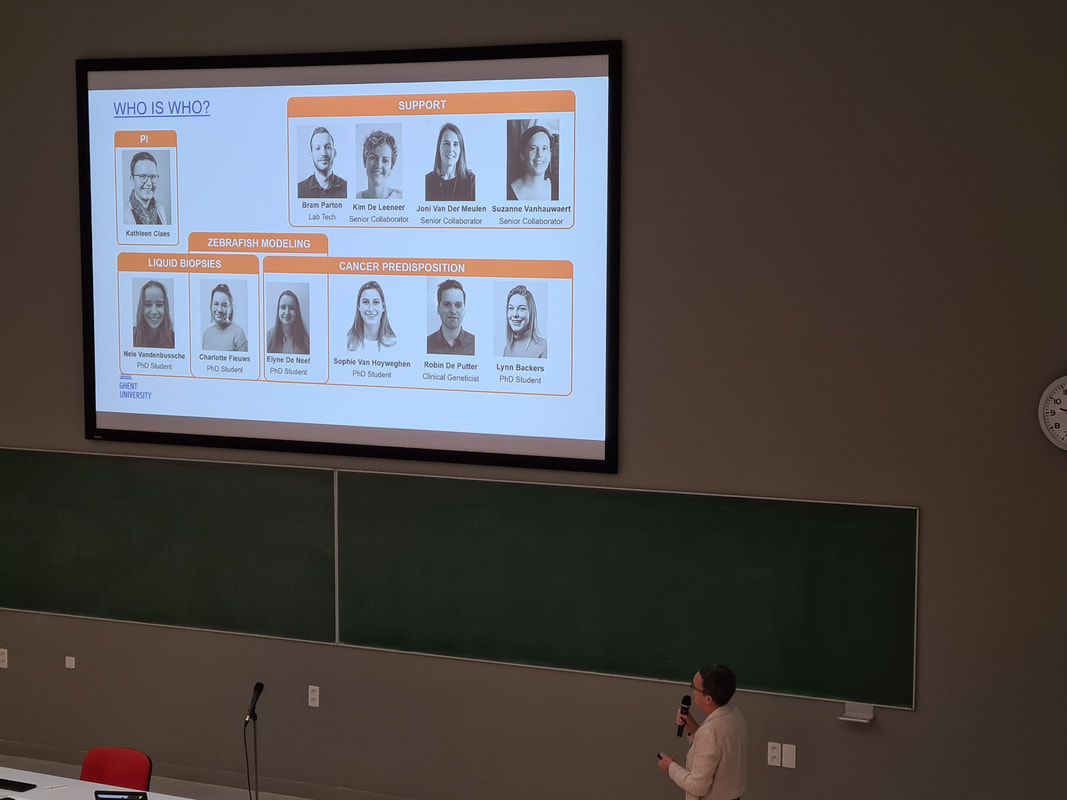 The Zebrafish Disease Models Society (ZDMS) held from 5 until 8 September their annual conference, Charlotte presented a poster and got input for her work.
Also Kathleen attended and it was a nice opportunity to meet with our collaborators from the Rita Fior lab in Portugal. We want to thank the organizers for the interesting days and the PhD networking event! Elyne, Suzanne and Kathleen attended a HBOC-VUS workshop 'Functional Analysis of Sequence Variants in Hereditary Breast and Ovarian Cancer Genes' in Leiden, the Netherlands. It was a really good organized conference were a lot of in field experts took part in. 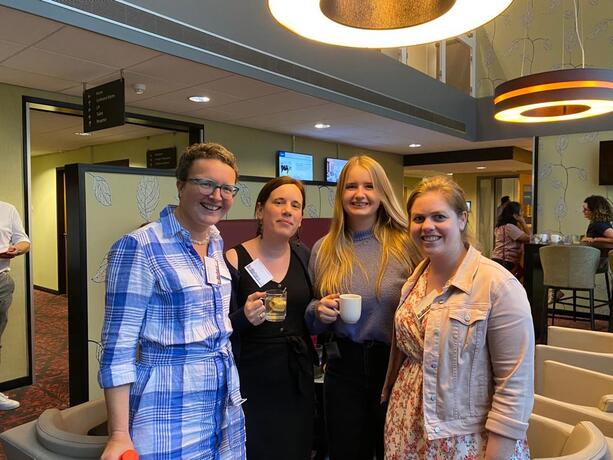 From June 22 until 26 Charlotte went to Montreal, Canada to attend the 17th International Zebrafish Conference (IZFC). It was a small size conference with all experts in the field of zebrafish research, this allowed a lot of interesting face to face conversations and the ideal place to network. Charlotte presented her work with a poster presentation and even in a short talk.
The annual ESHG Conference was held in Vienna from 11 until 14 June, for our lab Kathleen, Kim, Robin and Lynn were present. Lynn had a poster presentation. It was again a good setting for interesting talks about high level research. And as always great opportunities to get collaborations. Also the networking event was a perfect place to get informal talks about our projects. See you next year in Glasgow! 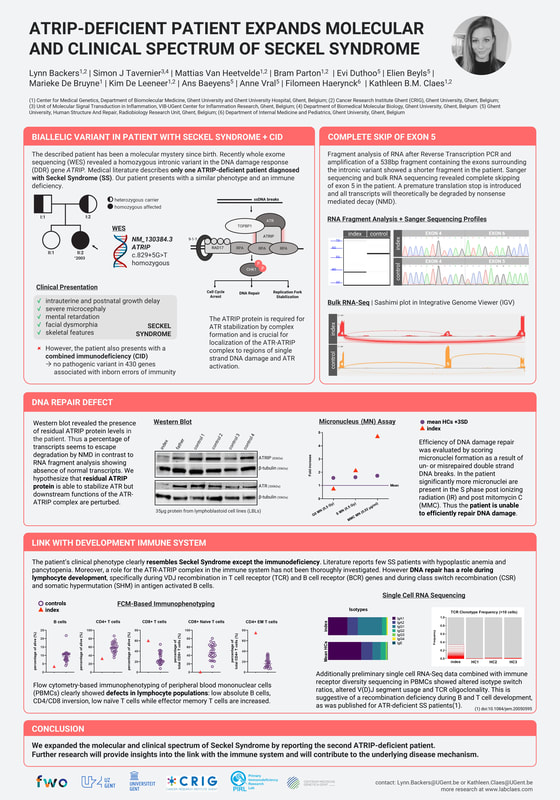 Begin June Nele participate in a 4-day wet lab workshop entitled 'DNA bisulfite pyrosequencing - from whole genome to targeted gene methylation analysis' in Poznan, Poland. Nele enjoyed the course and looks forward to use the new techniques in our lab. Jeroen last paper about the role of Atm in zebrafish is published in the latest issue (Volume 9, Issue 4. July 2022) of Genes & Diseases.
You can find the open access PDF version here. We are very proud of our alumni team member and all collaborators! Congratulations! |